Photo Credit: Pixabay.com
Recently, I’m inundated with this question. I think you are as well. Our country teeters on a shaky fulcrum, a harbinger of days and months ahead as we near political conventions, primary elections, and finally general elections. Many of us are concerned more about the safety of persons doing their civic duty or volunteering to help at election posts, or simply getting into arguments with family, friends, and even strangers. No matter where you stand politically, you have to admit there is a fog of fearful uncertainty descending on all of us and even though its ugly head looms before us, the future is a mere moment away. In the end, we are concerned about our democracy—and we should be.
We who believe in a merciful God are starting to plumb the depths of faith to ask for openness and guidance to help heal ourselves and our loved ones in this time of threatening clouds. We are somewhat like the apostles who were in the boat with Jesus when the storm arose at sea, and Jesus, seemingly unconcerned, remained asleep in the stern. But we know how he eventually responded. The life-threatening storm and ravaging sea were stilled at his command and the awestruck disciples fell back from their ropes and nets; their gaping silence swallowed into the calm of the night air. We are in the boat now and the storm is on the horizon. How can we prepare and how can we trust?
Humorist Garrison Keillor wrote in his January 19 online column that “…we need a cold winter to pull us together.” While at the Kansas City Airport during the recent severe cold in Kansas he noted that “the cold brings out the best in us. I could see how cheerfully Midwesterners react to mutual inconvenience.” Yep. We talk to each other without even knowing our political differences. Keillor adds, “The arctic blast facilitated our civility with persons whose opinions are crosswise to our own.”
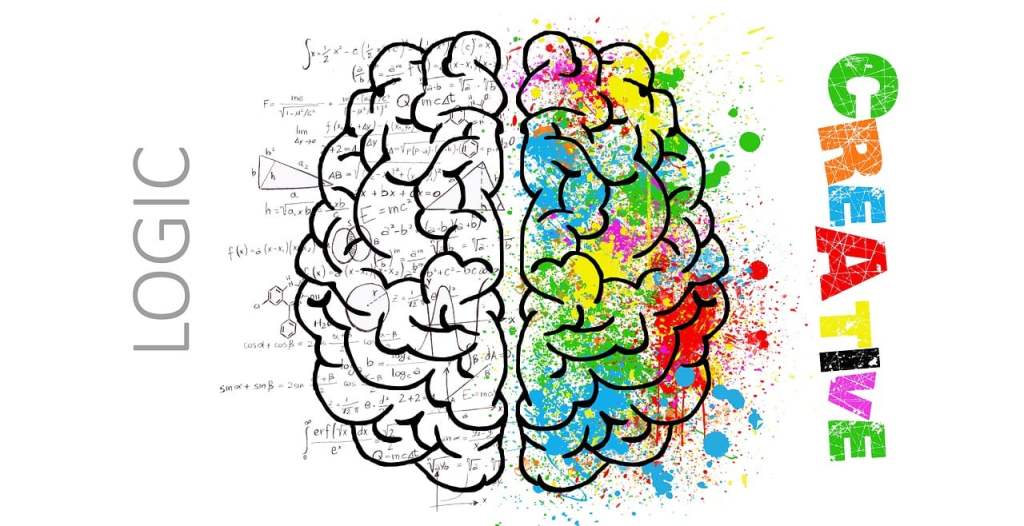
In my presentations, I often use the work of Iain McGilchrist, the Scottish psychiatrist and neuroscience researcher who is known for his work on the ‘divided brain.’ McGilchrist holds that the left hemisphere of our brain “focuses on details and brings to us a world made of tiny, isolated fragments that are unchanging, fixed…completely non-individual, devoid of life.” The right hemisphere of the brain, however, “sees a world in which everything is changing and linked to many other things. It sees a world that is complex and harder to pin down than the left hemisphere would like.”
McGilchrist argues that we need to understand and deal with both hemispheres and try to create a balance by which we involve both hemispheres in our pursuit of knowledge and truth. We cannot live in one hemisphere to the exclusion of the other. He opines, however, that the right hemisphere is more important because it sees more. It has a vast vision of life.
If an individual sees life as binary—that there is good and evil only, rich and poor, white and black—to give only a few examples, there is no grey, no margin of error, no give so to speak. All is factual, cut and dry. Such an individual lives in the left brain.
On the other hand, if an individual sees life as a vast limitless horizon of exploration of the unknown where there is a blurring of the binary and a value in intuition and inclusivity, the individual is living mostly in the right hemisphere.
Does this sound like conservative v. progressive? It might but please note that I am not over-simplifying McGilchrist’s extraordinarily thoughtful theories of the divided brain. I think, however, he is worth studying to help us as we sort through the challenges of our divided nation and world. We might ask: Do I nurture a sense of superiority regarding money, race, gender? If so, I am probably left brain in my thinking. Or do I make attempts to learn more about different people, different thinking? Do I try and understand why authoritarianism looks better to some rather than democracy? If I live this way, I am right brain in my approach to life.
Reflection
The key to developing a wholesome spirituality using both the right and left hemispheres of the brain, is to engage in a discourse that looks for what is good in the opposite beliefs of others. It requires civil conversation. Don’t be afraid of it.
Ask in prayer that you might be guided to see how Jesus handled the opposition to his message. Read reflectively Jesus’ reposte to the Pharisees who challenged him about curing on the Sabbath (Lk 6:1-11). Or the debate of the Sadducees and the resurrection (Mk 12:18-27). And his exasperation of the hypocrisy of Scribes and Pharisees (Mt 23:1-39). These are only a few examples of Jesus addressing the opponents of his teaching. He is firm and insistent but not unkind or bullish. Is there a lesson for us as his followers?
You might also want to learn more of the power of the human brain to renew itself by learning to understand the beauty and energy of both hemispheres of the brain and to bring that understanding to healing a divided nation and world. As we look ahead of this year, let’s not be timid about addressing divisiveness rather than being part of it. Let’s ask for the grace to understand each other because this is where unity starts. It’s very hard work, this strenuous effort toward peace but it is worth every loving initiative you can take to do it.
Quotes from McGilchrist were taken from The Occasional Papers of the Leadership Conference of Women Religious, Vol. 53, No. 1. Winter 2024. Pp. 20-25.
 In All Things Charity
A very timely and (as always) thoughtful piece. It dovetails nicely with the Pope’s call to synodality!
LikeLike