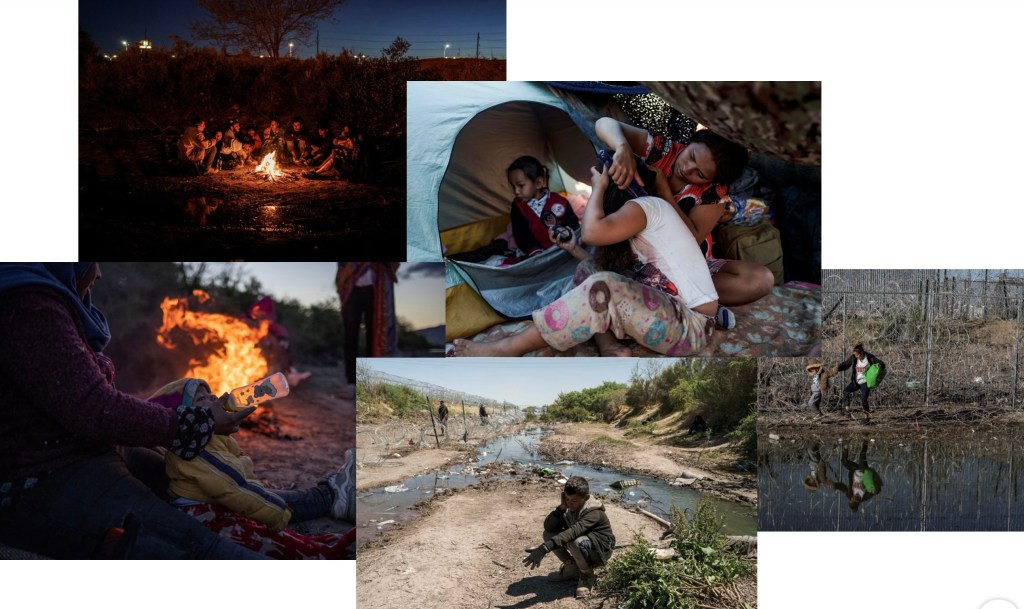
Many of us feel paralyzed at the toll of human suffering we witness each day in Gaza and on our own southern border. My community has two centers each in a different part of Texas trying to provide assistance to the desperately poor they work with each day. We are, perhaps, more attentive to the issue of immigration because of our personal attachment, but the war in Gaza rivets our psyches as well. Like many of you, we ponder ways to help. We can and do advocate through contacts with our government leaders; we attend lectures on these topics, and we read as much as possible from informed, unbiased sources. Of course, we agonize in prayer each day pleading for peace and resolutions where hatred prevails and not the love of our merciful God.
Thus, I was deeply moved to read the article, “Bishop Seitz: Look at the Border through the Eyes of Migrants” in America Magazine, May 2024. Seitz is the Roman Catholic Bishop of El Paso, Texas and is an outspoken critic of the U.S. approach to control the border. His article grows from the contention that some people are “betwixt and between” standing “astride multiple realities” but who become pivotal figures in guiding others to fair visions of a future of possibilities they can only dream about. We should try to be like such people because they try to see multiple sides of an issue and still appeal for the weightier justice of the issue. He cites St. Ignatius Loyola as such a figure and Pope Francis, but he develops his article on the inspiration of Bartolomé de La Casas, a sixteenth century Dominican bishop who gave his life in advocacy for the Indigenous People of Chiapas, Mexico. It is obvious that Seitz has deepened a liberation theology in his soul which makes him the ‘perfect’ choice as an ecclesial leader for the border.
Seitz claims there is the “weight of historical racism” embedded in our structures of immigration reform. We fear people whose skin is a different color, we hear unfounded accusations that these immigrants are “thieves, rapists, drug purveyors.” They will “poison the blood of Americans!” Seitz lists the many jobs these migrants now accept such as poultry workers, plant workers, hotel domestic workers, and so on. He points out Pope Francis’ claim that the border is not in crisis, but rather we are, we, the community afraid to change the system to a legitimate openness to a reasonable method of accepting the people who come to our borders. The Pope advocates a “recovery of the spiritual gaze, the need for contemplatives and mystics, people with penetrating vision who can see the sin at the root of the systems – political, social, economic – that we have erected which displace persons and brutally push them into the shadows.” This spiritual vision starts by asking: “If we were immigrants, if we were hungry, if we were abused and exploited women, if we were politically persecuted, if we were trying to unite with our family on the other side of the border, should not our opinions be very different indeed?”A person “between and betwixt” would acknowledge and advocate for good laws and policies but would recognize these laws need to advance through charity and humane application. There would be no place for governmental declarative and imperious commands like “send them back,” or “throw them in detention,” or worse yet, “shoot on sight.” Seitz claims the language of crisis creates a “willful, mischaracterization…part of a deliberate project of dehumanization at the border.” The situation makes you wonder why we cannot and, in some cases, refuse to discuss reasonable ways forward with leaders of other countries and especially with our own government leaders. The human toll in suffering is too staggering not to make a greater spiritual effort toward resolution of the problem.
Reflection
As I asked above: What can you and I do? I agree with Bishop Seitz and Pope Francis, and I’ll attempt to summarize their arguments through the following questions:
1. Develop an attitude of thinking as an immigrant. How would I feel giving up everything, walking thousands of miles and risking my life and my children’s lives for a better life?
2. How can I become a “between and betwixt” advocate making an effort to see as many sides as possible of this suffering? How can I then sort out the bias and selfishness and where it sits in me? Is the crisis at the border with me or with the immigrants?
3. How can I stand up for justice at the border? What can I personally do to add my voice to advocate for the oppressed?
4. Is my prayer contemplative enough? Am I open to the mysticism Pope Francis encourages so I might see or imagine possibilities beyond existing restrictions and then do something about it? If I pray with openness and let the Spirit fill my mind and heart, I am praying contemplatively. I will be inspired as to what I can do.
“If a foreigner dwells in your land, you will not harass him. You will treat the foreigner who dwells among you just as you would the person who was born among you. You shall love him as yourself, for you were once foreigners in the land of Egypt. I am the Lord, your God.”Leviticus 20:33-34
My dear Readers, let us join in prayer for inspiration as to what we can do to help the border situation. Let us be mystics for the poor.
 In All Things Charity
Why do we not hear any of these sentiments from the pulpits of our Churches? These and other conscience issues ( care for the environment, fair taxing, voting rights, racism etc) are rarely or never heard.
LikeLiked by 1 person
Maureen: I agree with you. But most priests are not sure of how to handle some issues and still not turn off others who disagree. They feel guilty turning anyone away with their comments. Still other priests are, sadly, either not informed enough or are not progressive in their political thinking and thus reluctant to brig these issues up. However, I believe all issues are Scripturally relatable and can be presented with charity to listeners with any point of view. Of course, more adult education is needed in parishes and dioceses. But, you, Maureen, please do what you can to help others in this holy quest. S. MAF
LikeLiked by 1 person