A few weeks ago, the annual World Happiness Report was published. Among the sources of research and statistical studies that come up with the information are Gallup Poll, University of Oxford’s Well-being Research Center, the U.N. Sustainable Development Solutions Network, and the WHR World Happiness Report Editorial Board. That’s a big chunk of credible and reliable sources who offer insight on happiness levels globally. The Report reflects worldwide attention on happiness and well-being for the making of government policies. Six major predictors which scored the highest government results of happiness among citizens were: 1) Social support 2) GDP 3) Healthy life and life expectancy 4) Freedom to make life choices 5) Generosity 6) Perception of corruption in government and business
You can see that social support is the highest predictor of happiness. This factor measures what the ease is that citizens have in accessing health services, education, employment, shelter, food, childcare, safety, the basic needs and rights of citizens.
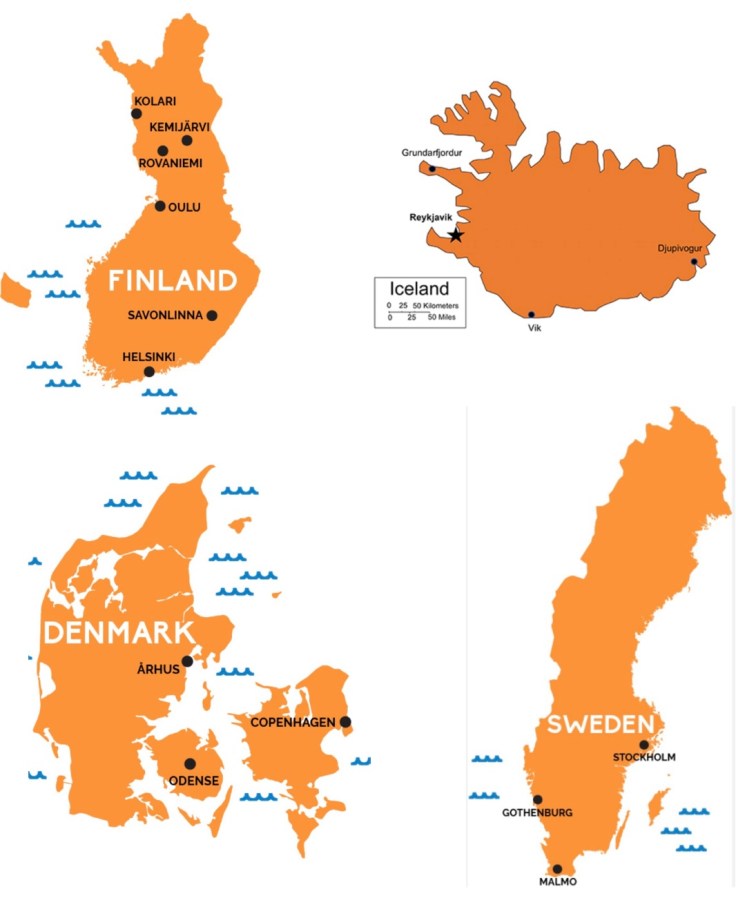
This year, as usual, the Nordic countries top the list with Finland at #1 for the eighth time followed by Denmark, Iceland, and Sweden as the next three in order. The theme this year which emerged from the surveys was Caring and Sharing in which countries reported that both helpers and recipients experience greater happiness from caring and sharing. On average, “countries that provide more untied official development assistance are happier.” It is notable, according to the report, that several countries have moved up to the top 20 positions that were never expected only a few years ago. Lithuania is #16; Slovenia is #19; Czechia is #20. Interestingly, these are countries who have endured decades of communist rule and subversion of rights but who have emerged stronger after that experience to offer their people more happiness based on caring and sharing than the United States!! Yes, we fall to spot #24 in this poll, lower than our #23 position of last year. Canada is in the top 20, higher than the U.S., which makes me smile considering the pesky proposition we have made that they become the 51st state! Really? Accept a demotion? I don’t think so.
In general, says the report, “the western individual countries are less happy than they were between 2005-2010. Why? I ask. Seemingly, we have everything. But then, do we? Our health care is costly and limits itself to unaffordable treatment in some cases and outrageous pharmaceutical availability in others. In Finland, for example, everyone is entitled to health care. As said above, caring and sharing is a major indicator of a country’s happiness. “Seeing kindness in one’s community provides a greater happiness boost than the absence of violent crime, mental illness, or having a much higher income,” says the report. Further, “there has been a surge of global kindness and benevolent acts especially among Millennials and Generation Z.” So why the slippage in America’s standing?
It appears that while individual Americans have stepped up to the plate in recent natural disasters, as a government we have much to do about caring and sharing. Certain themes appear paramount for consideration in becoming a caring and sharing nation. First, caring for our sick and elderly with robust health programs and the assurance of Social Security and Medicaid; free and quality education driven by insightful educators on all levels and not political leaders; and a comprehensive revision of our immigration and refugee policies not based on punitive structures but on global efforts with other nations and our own citizens to make our borders safe. We must acknowledge that our geography provides a funnel to which millions, especially Central and Latin Americans fleeing a dangerous life in their home countries, can make a journey, on foot, to our soil. Is this a contemporary story of the Exodus? As such, what are the implications for all of us as Americans?
Reflection
Even a cursory knowledge of history shows us that nations who opt for power in money, autocratic rule, racial suppression, have lost sight of a merciful, just God. They have replaced God with the intoxication of money and power. For all their wealth and power, the pharaohs of Egypt eventually imploded after Moses confronted them and shepherded his band of nomadic Israelites toward the Promised Land. An angry God told Moses to shout at Ramses: “Let my people go!” The slaves of Egypt marched with Moses for forty years to get to the Promised Land, but they were free.
Maybe we should take great hope in the millions of Americans who participated in the “Hands Off” marches last weekend. This is showing caring and sharing. We can have hope in the thousands of citizens assisting immigrants at the border and the literally thousands of attorneys working on behalf of asylum seekers. I admire the many students protesting the deportations of their fellow students who are of Middle Eastern or Latin American descent and have been accused of taking the wrong stance on one or another political side.

“Let my people go,” God seems to be pleading with us. Theologian Walter Brueggemann has developed the term, “royal consciousness” to describe what happens to a people who are not open to the acceptance and assimilation of those who are different from them. The people in power allow that power to corrode their hearts replacing their belief in God with the enticements of royal living and ruling. You will see it in their gold monuments, in their ostentatious symbols, their glorification of the military, their extolling of the rich over the poor.
In these last few days of Lent, we might ask how we can help to make our country more caring and sharing and thus, happier. As Passover nears, we might find it helpful to reflect on happiness as something that becomes our gift when we care for and share with others. We might also look for ways we can help others such as the immigrants and refugees at our border and the many Americans who need social services to survive. Spend some time with the Book of Exodus, especially 5:1. May the voice of our God ring in our ears: “Let my people go!” have special meaning for all of us this Easter.
 In All Things Charity
The countries at the top of this list are also very homogeneous (more than 80% white) with low birth rates! They are also relatively small. They do not face the huge challenges of diversity, immigration, equity, etc. They are what many of our conservatives want our country to be which is why the current administration is abolishing DEI, deporting immigrants, erasing diverse and minority historical records. We must be careful not to compare apples to oranges!
LikeLiked by 1 person
Thank you for your insights! I thought about this as well: these are all caucasian countries, smaller populations, etc. However, the report also says that the economics are calculated per capita. I totally agree about our country trying to erase diversity–a disgusting and inhumane move. But the nordic countries, particularly Denmark and Finland, stood solidly against the Nazi movement in WW II; this took immense courage on behalf of Jews and other maligned populations seeking refuge in these countries. I have become aware that currently diversity is on the increase in these nations from Eastern and African nations as well and I think, given their inclination to neutrality, it might grow fairly strong.
Thank y ou again, for your well-thought out response. Happy Easter!
LikeLike