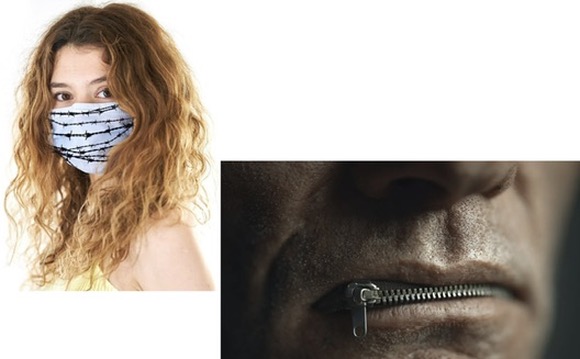
Photo Credit: Pixabay.com
Read this story carefully:
“To stop this from further spreading among the people we must give them a stern warning never to mention that man’s name to anyone again. So, they called them back and made it clear that under no circumstances were they to speak the name of Jesus or teach about him. Peter and John answered, “Judge for yourselves whether it is right in God’s sight for us to obey you rather than God. Surely, we cannot help speaking of what we have heard and seen.” At that point, they were dismissed with further warnings.” Acts 4:15-21.
The accusers are the leaders, the elders, the scribes of the Sanhedrin including the high priest Annas, Caiaphas, John, Alexander, and the high priestly class who were angry at the speech Peter and John had made about the resurrection of Jesus and which converted some 5,000 people. The two apostles had been arrested for overnight and are now facing a powerful organization who want to adhere to strict religious teaching, not the new vision Jesus has brought. They are being silenced. They cannot teach the very root of the Christian faith: He died and rose. If they had ceased this preaching, if they had not found ways to navigate the powerful currents they faced in the Sanhedrin teaching about death and resurrection, Christianity would not have grown to what it eventually became in decades, even centuries to come.
One of the principle doctrines of the Sanhedrin was the denial of bodily resurrection. Saint Luke regarded them as “archenemies of the Christian movement and places them in the ranks of its persecutors.” (JBC, Acts of Apostles, 45:28-29.) Therefore, they come out viciously opposing the new teaching. The Pharisees were more open-minded about resurrection, we are told, but the Sadducees, which made up the Sanhedrin, held the line on certain teachings. Both, however, wrestle with this new teaching and how it will impact the ordinary people. There is one caveat here, however. Neither Pharisees nor Sadducees are fully vested in the plight of the poor.
Add to this something I had written before in a post: the gift of parresia, speech that cannot or should not be stifled or controlled because of the message of the speaker and the well-intentioned content being presented. The scholars of the Jerome Biblical Commentary write that “Parresia is a traditional attribute of the preaching of God’s word, continuing in the Passion and the kerygma (teaching) of the apostles and Paul’s preaching.” (JBC, 45:30)
This begs the question about the title of today’s blog: Is there a spirituality of free speech?
Speech is of the human spirit. Take away the voice and you have sign language. Take away the ability to speak in some cases of autism and you have actions, gestures, guttural expressions that are all forms of speaking. Speaking comes from inside ourselves, our souls, our spirits. It comes from the well-spring where thoughts and feelings, both good and bad, take shape and need to be spoken. Speech is of the soul. No one is authorized to touch or control your soul. Sometimes that soul is flawed in its thinking and we have corrupted speech. Often, however, that soul emits the most eloquent thoughts to inspire, to teach, to employ —as Abraham Lincoln said— “The better angels of our nature.”
Two things we must bear in mind as we encounter the misunderstanding about free speech these days. First, free speech can be used the wrong way. Profanity, lies, obscenity, and luring the vulnerable are examples. Such speech comes not from the noble spirit but from the spirit of evil intending to satisfy the prurient interests of the speaker. This type of speech is punished by law because it generated the violation of another’s rights and sometimes even death. Some speech covers the animus of the tyrant through power; this speech is not transparent, nor free. Fortunately, there are guardrails in law that govern and protect free speech in democratic societies.
Second, because it comes from the human spirit, free speech cannot be annihilated, only governed by law. You do not have to agree with a speaker, but you have to grant the right for him or her to speak. This is how we learn about the thinking and the soul of the speaker. Then, it becomes your duty to respond in kind. Opposing a speaker often requires courage and that is where your soul, the container of the spirit of free speech, animates you and parresia, the inspiration of the Holy Spirit, takes the floor.
Reflection
I think it’s time we who are committed to the gift of free speech do some soul searching and ask for guidance on how to respond. Perhaps we should ask someone who is a spiritual leader (clergy, spiritual director, pastoral person) perhaps a teacher, professor, even a respected friend or neighbor, about how to address the nefarious challenges being made today against our cherished First Amendment in the Constitution. There is a reason why it is the First Amendment. The Founding Fathers saw it as the bedrock of our nation. We have no democracy without it. They built our democracy from that right forward. Whether you write letters to your Congressional leaders, or join a local group focused on the rights of others, you are responding. If you hold protest signs at marches, or call the offices of your political leaders, you are responding. If you attend local council or school board meetings, you are responding. If you attend town halls hosted by your congressional leaders, you are honoring free speech.
Without parresia, we are all—yes all, without the beauty and respect of the soul that free speech provides. Speak out as you can. Pray as you must. Plead for the reverence and respect for the soul that free speech provides.
Most martyrs died professing that they were denied the right of free speech to preach his name. And this goes all the way from early days of the Church to modern martyrs, like Dorothy Kazel, OSU, Maura Clark, MM, Ita Ford, MM, Jean Donovan, Dorothy Stang, SSND.
Let us pray, my Anonymous Angels and all my readers that we never lose the right of free speech.
 In All Things Charity
SisterYou hit the “nail” right
LikeLike