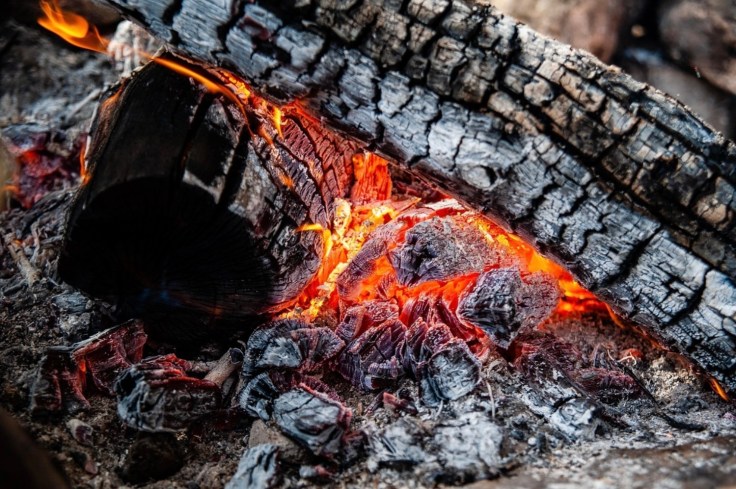
If you lived in a northern city in the U.S. during the 40’s and 50’s, you will remember that most homes still had coal furnaces for heat. Our dads had to keep the heat pumping by filling the furnace with coal periodically as the day and night wore on. Remember the coal bins in the cellars of every home? Remember the coal delivery when a truck ambled up to your coal chute door and dumped the coal into the cellar? One had to clean the furnace every so many days to get the soot out with the spent ashes and in most cases all was shoveled into a barrel or pails and transported to the garage for the inevitable coming snowstorms. Why? Well, the practical use of coal soot was for driveways and streets that would need traction under layers of snow and ice. Living close to Lake Erie provided much lake effect snow and the remnants of the furnace would now be put into action. Let’s just say that the average Cleveland street did not look like the enchanting Christmas card of a pristine virginal Vermont snowfall. Nope. When my dad poured the soot on our driveway and the part of the street in front of our house, as beautiful snow fell, he was creating a porridge of Cream of Wheat mixed with black molasses. Not a pretty site. Car tires were suited with chains that sputtered the grimy mess all over white fences and even other cars parked in the vicinity. Driveways became sloppy slushy black tributaries leading to the street sewer lids. Mothers made their children take off their boots in the cellar before entering the living space of the home. Sometimes bits of frozen ashes would show up in your book bag ruining that spanking new oil cloth cover for your spelling book.
When I entered the community, we still had coal furnaces operating to keep our large motherhouse somewhat warm. Novices had the job of rotating shifts throughout the night of ‘banking’ the fire or shoveling more coal into the furnaces. These furnaces were huge: they were more like the behemoths Cleveland’s Republic Steel plants. Once a week they had to be cleaned out of all ashes along with cleaning the long tubes that swallowed the heat sending it to the pipes above. Two novices could fit in the bowel of the furnace to dig out any recalcitrant boulders of coal.
Reflection
Needless to say, I developed a dread for ashes. Much later, however, I realized that ashes are the ‘leftovers’ of something consumed, burnt up, leaving particles behind for cleaning up. Given the religious symbolism of ashes, could they be the detritus of what we offer to God from within our souls? In other words, could ashes reflect that we have let the wildness of nature, fire, purge us from what is holding us back from complete union with the Creator? The overpowering existence of warmth and heat takes the place of the cold clutches of greed and power when we let the ashes prevail. Lenten ashes are meant to remind us that much of what we are concerned about or become absorbed with, might actually be harmful to our spiritual lives. Are you more concerned about money for your self? More concerned about looking good to others, than sincere assistance and love for others? More intent on power or authority in your work place, than contributing a reputable product and having happy employees? Lighting a fire to bring these concerns to ashes, is a step toward a renewed Lenten preparation for Easter.
What about dust? It’s different from ashes. When my eyes are better, I intend to read Nobel Laureate Christian de Duve’s readable book, Vital Dust, Basic Books, 1995. In the book, de Duve explores the importance of ‘dust’ in the universe. He claims that dust is the origin of earth’s life. Compare his quote: “The earth is part, together with trillions of other Earth-like bodies, of a cosmic cloud of ‘vital dust’ that exists because the universe is what it is,” with, “Remember, thou art dust, and to dust thou shalt return.” (Prayer said as ashes are placed on foreheads on Ash Wednesday.) Think also of the beautiful line in Psalm 139: “I knew you when you were in your mother’s womb.” God knew us as dust taking form, growing into a human being, as he knew Adam and created him from “the clay of the ground” as recorded in Genesis. We are dust. We are part of the infinite thread of connected particles lovingly tended by a God who brought us into existence. We are good dust. We are vital dust.
I do not interpret the holy reminder that we will return to dust as a feature of our morbidity; I interpret it as a reminder, instead, that we will live forever with a mind and soul that will constantly be rewarded with more love, more life from the dust we become. De Duve says beautifully, “We belong to the God who well knows what to do with dust, who sees dust as a place to dream anew, who creates from it again and again.”
For this Lent, lets make ashes out of a simple offering: rooting out our selfishness and doing a kind act now and then. Burning our inclination to judge into understanding of another. And let’s look for the beauty of life in music, art, relationships, contemplation. Rather than wallow in the fear of death, let us seek ways to praise God by intensely living the life we’ve been given. Then we are taking seriously the message: “Ashes to ashes and dust to dust.”
I have a unique opportunity this Lent to offer up so much for all of you. I remember all of you in my prayer and in my frightened moments of darkness. I call each of you to mind as I pray. And I lovingly treasure your cards and messages, your sincere thoughtfulness. I will get better. My eye will see again. I love each of you. Blessed, holy Lent.
 In All Things Charity
Sr Mary Ann you are a beacon of light to all who know you… let our Prayers for you be a ray of light shinning in you heart as your eyes feel the strength from the LIGHT OF HEARTS!
Love ya!
Mary
LikeLike
Sr Mary Ann you are a beacon of light to all who know you… let our Prayers for you be a ray of light shinning in you heart as your eyes feel the strength from the LIGHT OF HEARTS!
Love ya!
Mary
LikeLike