This Easter we will hear John’s account of discovering that Jesus has risen. The main character in all four of the Evangelists’ accounts is Mary Magdalene who leads a cadre of other faithful women to the burial site where they hope to anoint the body of Jesus.
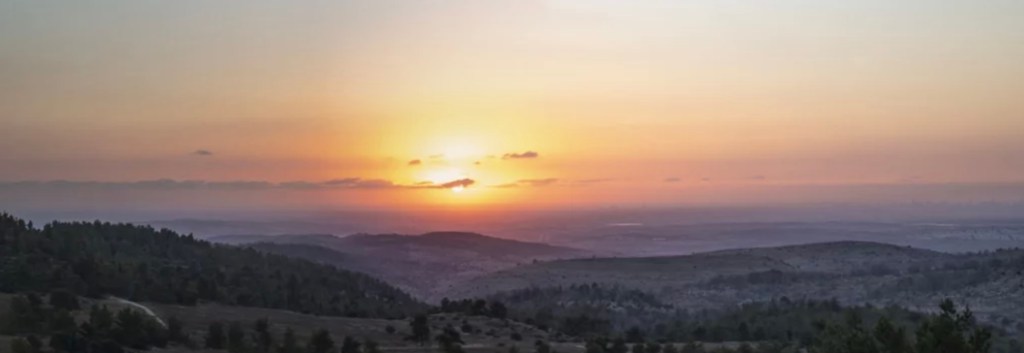
Let’s picture this scene. We are told it was “early in the morning while it was still dark.” The women are hurriedly walking after having met at a designated place. They would have been foolhardy to walk alone, especially carrying precious oils and spices. Some carry the cloths, some the spices; Mary carries the oils. They tumble quite often as they walk in the darkness; they are breathless and sadly excited, perhaps nervous. They chatter quietly about what they had witnessed the past Friday, and they cry silent tears.
When they arrive, they see that the entrance stone to the grave has been rolled back and peering inside they do not see the body. Mary says she will run to the apostles and tell them what she and her companions have seen. Imagine her journey as she runs to where the apostles are hiding. She is weeping. Her heart is torn with grief thinking Jesus has been stolen. When she stumbles, she falls hard on the stones and dry earth. Her hands and feet are bleeding. She is on a quest to find her Lord.
When Mary returns to the tomb with Peter and John, she retreats again into the tomb. The two apostles leave for their homes, but she is weeping again, uncontrollably in her grief. As she moves to leave the tomb, she sees a figure outside looking toward her. He must be the gardener. Her eyes are blinded perhaps by the sun or the luminescence of a glorified body. At this point, John has constructed a unique faith drama on the importance of a loving relationship, a deep friendship that is necessary in order to promote a greater good. Jesus trusted Mary Magdalene this way and she loved him so unselfishly as to accept the message and spread it. This is our Easter challenge as well. Like Mary we are often kneeling in the garden, waiting for word. But it comes only when we begin to look for him and to know he will come.
Mary begins to question the visionary form before her, and he answers with only one thrilling and loving word: “Mariam.” Suddenly, tears, anguish, and grief hang in disbelief and for one moment the mind and soul and the world itself in suspended abeyance of a miraculous stillness, she recognizes the voice of love. Her response is just as loving through her sudden joy: “Rabboni.” And instinctively, she reaches to embrace his feet, but he tells her not to; instead, she is to go to the apostles who are still in hiding and tell them “I am ascending to my Father and your Father, my God and your God.” At that moment, Mary Magdalene becomes what she will be called for centuries to come: the Apostle to the Apostles.
The scene described above is extremely poignant and powerful for its encapsulation of two individuals, alone, who begin the history of a new faith based entirely on love and through the love they had for each other. It is as if no one else is around and we can assume that is true. It is a private moment between Jesus and Mary Magdalene, and she is commissioned because she loves so much. There seems to be no doubt that Jesus purposely selected Mary Magdalene, alone, to share in this moment, the most meaningful moment in Christianity.
Reflection
James Martin, SJ, reminds us that the “most powerful tool for spreading the Good News is not knowledge but experience.” Oh yes, we need scholarship and research especially from clear-headed theologians and writers, but we also need action and experience. The apostles found it impossible to understand the reality of the resurrection until they would see him later in the upper room and on the shore of Lake Galilee. Their knowledge of the law impeded their openness. However, they ultimately did much better than the Pharisees and Saduccees who interpreted the religious laws so rigidly and literally that they failed to see any truth in Jesus’s teaching.
In the end, the true disciple, claims Martin, “does not say simply, “I have studied Jesus,” but as Mary Magdalene did, “I have seen the Lord.””
As Easter approaches, you may find it helpful to reflect on John 20:1-18.
- What can you do to activate your Christianity the way Mary Magdalene did? For instance, how can you preach the message of love and to whom?
- Have you ever tried to make Jesus a beloved friend? Would you take risks, as the women did when they hastened to the tomb, risks that would enlarge the faith and help you to grow spiritually?
- Do you think you have ever ‘seen’ the Lord. If so, make it holy by praying over it and thanking God for it.
(All quotes are taken from Jesus: A Pilgrimage by James Martin, SJ)
 In All Things Charity
Mary Ann, Thank you for making the gospels come alive for us today! You described so beautifully how our faith itself is rooted in two individuals who had a relationship of deep love. And your quote by James Martin really touched me. “The most powerful tool to spread the good news is not knowledge by experience.” This is not to discount our many wonderful theologians–from ancient to contemporary–but it puts that knowledge in perspective. I ask myself, “Do I keep reading ABOUT Jesus, or am I personally encountering him in my prayer and in the people and events of my daily life–and even in the news headlines of our day? Thank you, dear friend for your insights! Keep writing! Blessed Holy Week and a joy-filled Easter to you! Melannie
LikeLike
Thank you Melannie for your words. The more I reflect on this story, the more I see the value Jesus taught us in loving relationships. Suppose Mary and the other women had not gone to the garden that morning. This is something to reflect on. Our faith is more about experience than knowledge.
Blessings to you, Mary Ann
LikeLike
I always learn something from your writing. Thank you – you are beautiful!
LikeLike
Thank you. I always appreciate your
replies. Our scriptures give us so much to reflect on.
Keep enjoying the exploration.
Have a blessed Holy Week!!! And joyful Easter.
S. MAF
LikeLike
I love the connecting ideas of Mary Magdalene and the women coming and seeing the empty tomb, and Mary running to get Peter and John, and then seeing Jesus – that little connection was never mentioned in my hearing, but it makes it all make sense.
Relationships are so essential – thank you! take care, Margi
LikeLike
Thank you Marge: Isn’t it a gift to return to readings we have heard or read so often before and suddenly learn something new? That’s the effect of the Gospels. So happy you get this. MAF
LikeLike
You write so beautifully, Sr Mary Ann! What a gift! We often stumble through times in our lives that are confusing and sometimes, painful. But when Jesus reaches out to us to let us know he is there, he is trusting us as well – to recognize him and to respond. That’s what your writing does for me and others. There’s nothing so precious as a loving relationship born of grace. Undeniable and unexplainable. Thank you for being an extension of Incarnational Love!
LikeLike
Sharon: You ponder like a theologian!! Your words mean a lot. This reality of relationships in the spiritual life is so important because it is as you say, incarnational. Jesus is there. God bless you, Sharon. MAF
LikeLike