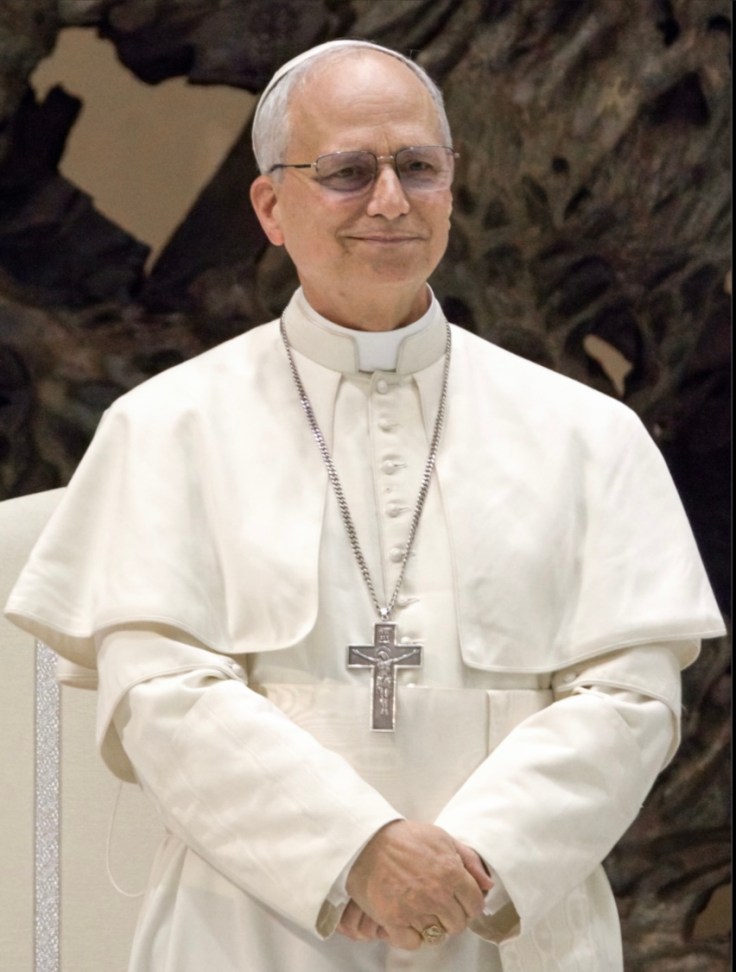
I’ve been approached these past few weeks to explain excommunication in the Catholic Church since Pope Leo XIV formally excommunicated the Pius X Society following the ordination of six men as bishops in the Society, which the pope had explicitly warned against sometime before the event.
To understand this issue, one must first realize that the Society was founded in 1970 in direct retaliation against the changes instituted in the Church from the directives of Vatican II. Marcel François Marie Joseph Lefebvre, a French priest, was connected to politically far right groups and was “…formed by the bitter hatreds that defined the battle lines in French society and culture from the Revolution to the Vichy regime.” (Michael Davies, Apologia for Marcel Lefebvre, 1980, chapter 13.) Lefebvre was ordained a priest and was a member of the Holy Ghost Fathers and along the way became an Archbishop. But he became increasingly unsettled with the Church after Vatican II and with the French government as it moved to more moderate politics. He became an Archbishop and was assigned to Switzerland where he opened a seminary for traditionalist young men. In 1968, Lefebvre resigned from his order when his superiors demanded compliance with Vatican II reforms. He began developing groups of laity to follow his thinking but in 1975 he was ordered to disband and in 1988 he was excommunicated for ordaining four bishops and ignoring any Vatican II reforms most notably, ecumenism (respect and relations with other faiths), and liturgical changes which dissolved the use of Latin in the celebration of Mass. Lefebvre died in 1991.
Many Catholics who are drawn to the traditionalist Church do not know the political sources that form its thinking; they are mostly drawn to the enchanting music and Latin of traditional Masses called Tridentine Liturgies. Yes, the music and the Latin flow beautifully (if done right) and are uplifting; however, good liturgists today know how to creatively use them in special Masses that are not traditional.
So, what is an excommunication? An excommunication is a separation of the Church from a person or persons who publicly deny the doctrines of the Church in word, action, or both. The pope approves an excommunication after much investigation and personal prayer. If you deny the teachings of the Church, you have, in effect, made yourself a non-member. You have created what is called a schism, a break from your communion with the Church.
Pope Leo had warned the St. Pius X Society for months not to ordain their bishops. When they disobeyed, the Society was excommunicated including all its priests and nuns and lay membership. It is important to realize that criticism or arguments on doctrine based on reflective thinking and actions of advocacy are not material for excommunication. Often such criticism leads to enhancement or enrichment of the doctrine, and this is the task of theologians and schools of theology. In other words, you can disagree with a teaching in the Church and still be in good standing. It’s somewhat like disagreeing with your government and still loving your country.
Reflection
Many of us have wondered why a relative is considered excommunicated for some denial of one of the doctrines of the Church. First, a denial is considered public if the public knows of the denial and the person’s refusal to recant. In most cases, there has to be a refusal to support and live doctrine. A local bishop or, in rare cases, a pastor can determine if the denial warrants excommunication. We must always remember that the Church insists on pastoral guidance and consideration of a person’s conscience before determining if excommunication is chosen. There are many facets to a soul’s condition in the eyes of God and human beings must make superior efforts to see that more of God is in the decision and less of their human judgment.
In and around our American dioceses there are several traditionalist groups, not necessarily associated with the Society of St. Pius X but traditionalist, nonetheless. We need to treat these brothers and sisters as our own and pray that they help connect with us as we help connect with them and all of us enjoy the community of togetherness in faith.
One of the reasons I appreciated St. Ignatius Loyola was his great compassion for people on the margins. He challenged the Church but became an advocate for people on the margins, especially in the Spiritual Exercises. I will provide some sources for that in the future, but you can research it as well. The teachings of Jesus are full of stories about non-judging and helping people to appreciate the truth of the body of doctrine the Church provides.
Let us pray for those souls who are seeking the truth but struggling if they should stay in the Church or not. We should pray that they find peace in some form of faith commitment.
And, please, if you know of someone struggling to remain or return to their faith, please guide them to a good and understanding person: pastor, religious nun, friend, or deacon who can bring them gently into the community they once loved.


My aunt got divorced because legally, she had to for her independence from her ex. I didn’t know that, so when she explained she had her marriage annulled with the church, but had to get divorced for civil law, it made more sense.
Too many people don’t know or understand the difference.
LikeLike
My aunt got divorced because legally, she had to for her independence from her ex. I didn’t know that, so when she explained she had her marriage annulled with the church, but had to get divorced for civil law, it made more sense.
Too many people don’t know or understand the difference.
LikeLike
My aunt got divorced because legally, she had to for her independence from her ex. I didn’t know that, so when she explained she had her marriage annulled with the church, but had to get divorced for civil law, it made more sense.
Too many people don’t know or understand the difference.
LikeLike