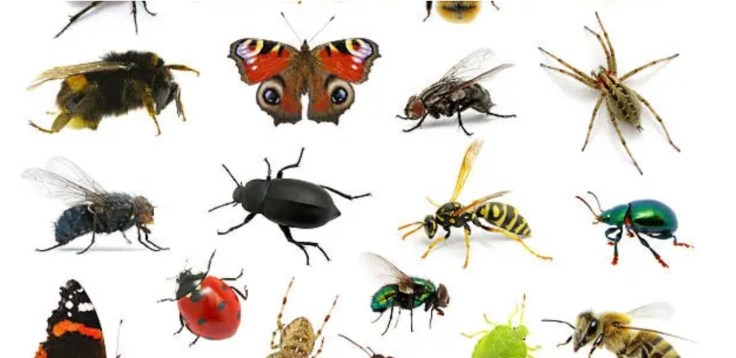
Warmer days are coming: Yaaayyy!! The bugs are coming, too. Ugggghhh!!
Many people think this way; we love the warmth, but we do not love what comes with it. We are swatting, swishing, stomping the smallest of creatures as they emerge, with us, into the long-awaited sunshine. A few decades past I resolved never to kill an insect or small earthling of any kind who was just making its way through its short life of foraging and chirping, climbing, and finally, resisting the predator. (I admit that I do not entirely appreciate certain critters like huge cockroaches, nasty mosquitoes, and bed bugs.) And I very carefully note the presence of deer ticks and fleas that can bring harm to animals and pets. The sisters with whom I live are accustomed to my unconventional ways with nature and insects in particular. I once accompanied one of the sisters to an emergency room for what turned out to be a sprained foot. While we sat in the exam room talking with the doctor, an insect sauntered across the exam room minding its own business when the doctor sprang into action with a piece of paper and lifted the bug to a window where it was promptly let outside to continue its journey. “Sorry,” said the doctor, “but I do not believe in killing even the tiniest insect.” I glowed. Vindicated!
In our 100-year-old farmhouse, I have removed snakes, which are not insects, and spiders from corners of the basement and even once removed a garter snake from the washing machine! Stink bugs love old domiciles and are easy to snag because they have suction cups at the ends of their legs which practically glue them to surfaces. The insects most appreciated by humans are butterflies, bees, and ladybugs. Humans love watching butterflies and often provide milkweed to attract them to flower gardens. Bees are amazing creatures whose lives are sadly in jeopardy due to toxic weed killers spread liberally in farms across our nation. The lumbering ladybug is ‘cute,’ and non-toxic, and comes in various colors and patterns. This insect is said to bring good luck and have spiritual qualities. In Russia, the ladybug is revered as a friend of the Virgin Mary.
On April 22, we observed Earth Day, a day which would be cancelled if certain politicians had their way. But deeper reflection should be part of Earth Day. We should give praise to our God for the creation we enjoy and live with. We co-exist with animals and plants each of which is part of the Divine Plan, even the smallest of insects who insulate our crops to keep away the dangerous, uninvited critters who would otherwise destroy our produce. But bad insects have a purpose too. They can be deployed to take down massive invasions of weeds and debris or carcasses surrounding areas cultivated for planting. Which takes me to Sr. Melannie Svoboda’s blog of last week in which she acknowledged the purpose of the least liked bird in America: the vulture. But they are like the post-party cleaners; they clean up roadkill and carcasses in the forest or woods and sometimes munch on the remains of picnics in our wonderful parks. They are never intrusive in human gatherings.
The argument that the lives of insects are not as valuable as animals with vertebrae or that they do not feel pain is an argument currently challenged by many respected scientists according to science writer, Shayla Love in her article, “Do Insects Feel Pain?” (The New Yorker, January 5, 2025) A sentient animal, one with a vertebra, feels pain; but it is questionable whether an animal without a vertebra, allegedly a popularly considered non-sentient animal, also feels pain. However, evidence is mounting that insects do feel pain. Proof of such will have an effect on industries that make a fortune on pest control and on agricultural practices considered toxic for humans and all animals. One can only imagine the opposition that will arise on this issue.
What are some simple steps you can take to be more friendly with and unafraid of insects? First, be proactive. If you anticipate the spring arrival of certain insects in your home, research for ways you can clean the areas where you think the insects will emerge. You can contact the local college or university’s entomology department for help in creating a compound or mixture of substances to use.
Second, whenever an insect appears in your environment, take care to remove it with a paper and place in a box or jar and release it outside. An insect will try to run very fast if it realizes you are approaching it, so be very sure to have paper and containers very close to you.
Third, if you have never seen the insect before or it appears too large to salvage, do not try and save or even kill it. There are a few poisonous ones found in certain areas of the country whose bites will not kill you but can cause health problems.
Reflection
What has all this to do with spirituality? Some philosophers hold that our treatment of animals, both sentient and non-sentient, reflects our approach to human beings. Treating bugs with casualness and ignoring their existence because they are not on the ‘lovable’ scale; they are not cute or cuddly, says a lot about one’s attitude to people we might consider not cute or cuddly.
Do I find some people unlikable because of traits I don’t find attractive?
Do I include people in a group who may be shy, self-conscious, uninformed?
Do I remember to pray daily for a large heart that can include love and respect for all people and all animals because God, our Creator, loves them abundantly?
Google Sister Melannie Svoboda’s blog under “Sunflower Seeds.”


Leave a comment