Let’s try to limit our arguments against the unreasonable among the many disputes on political issues. Can we do this over the next few months? The inane arguments can sink like rocks thrown into the river; the valuable can soar like birds on the shore knowing they carry life and, yes, song for the universe. In other words, some arguments are without moral grounding; they are simply stupid. They sink. Some make us think. Make us probe. They make us soar. They make us sing. Some seem flat, unidentifiable if they are lies. For instance, “We know the war against Iran will soon be over.” Evidence? “We know your groceries and gas prices are going down but it’s only temporary.”Evidence? These are rocks, arguments sinking into the river.
What about the arguments that can soar like the birds on the shore? These are the arguments grounded in thought not power; they are rooted in spirituality and the belief in something Greater than the humans making the arguments. They lead us to see and reach out to those without power or voice; they are moved by that someone Greater who is concerned about those without power or the use of their voice.
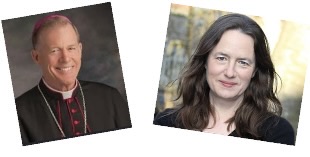
Many of these people speaking to power on behalf of others are scholars, writers, academics, religious leaders, influencers who are not popularly recognized but who are reaching some political leaders through their writing or media sources. I think of two such leaders here: Heather Cox Richardson and Bishop John Wester of Santa Fe, N.M. Since 2015, when Wester became Bishop of the Santa Fe Roman Catholic diocese, he has stirred contentious disagreements centering on his progressive stands for pastoral acceptance of homosexuality, undocumented immigrants, and the very poor in his diocese. He has led his faithful to oppose The Big Beautiful Bill and supported the rights of Muslims to build a mosque in Santa Fe. He has challenged the nuclear industry still active in Las Cruces and Santa Fe. He accompanied immigrants arriving from Mexico walking with them over a bridge into the United States. Most recently, he wrote what might be his last pastoral letter: “Uniting Our Sacred Waters: Conversation and Action Around the Sacredness of Water.” He promoted his pastoral letter standing on the dry bed of the Rio Grande pouring a pitcher of water at his feet. “Water is a right without borders” he said, indicating it is sadly denied the poor. Unfortunately, this courageous and mild ecclesial leader must tender his mandatory letter requesting retirement since he has reached the age of 75. We can only hope he becomes a bishop-emeritus as his voice remains much-needed as the Biblical challenge we need to hear.
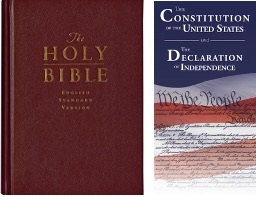
I recently heard an interview with Heather Cox Richardson, a probing, balanced intellectual who has created a voice to be heard, read and deciphered among citizens seeking truth and enlightenment regarding issues of the day. Richardson is a political historian “who uses facts and history to make observations about contemporary American politics.” She is an authority on the Civil War, Reconstructionism, the Gilded Age, and the American West. During her interview, Richardson was asked: “Do you have hope for America?” She quickly answered: “Of course I do. As long as The Constitution exists, there is hope.” She went on to elaborate that this document was forged out of the fires of a fierce, nascent Republic dependent on a Higher Power and dedicated to the essence of the human being: freedom and liberty. The sensitivity with which she spoke had me riveted. We need to listen to thoughtful persons like Richardson and Wester, the former dedicated to The Constitution, the latter to the Scriptures but both arguing from the essence of our humanness and the guidance these writings provide. This makes us soar into possibilities and flourishing, not sink into selfishness and despair. Both of these people stand for hope!
Richardson was raised Episcopalian but keeps her faith practice under wraps. Like a good historian, she does not profess a religious faith or a political party publicly. She remains objective so as to reach all persons. Wester must profess his faith as his teaching is based on Scripture. It does not make him less objective but rather open to all people of all faiths as Jesus taught.
Reflection
As I researched the mission of Wester and Richardson, I learned of two outstanding leaders who are examples to me. I found that I need to re-read The Constitution and let its stirring prose built on the foundations of classical democracy and respect for God’s creation of this nation seep into my soul that I may have a soaring hope for our future. And I found a renewed love for the teachings of my faith calling out to me every day to live a joyful hope in a renewed spirit promised in our scriptures. Join me in thanking God for insightful leaders who, despite toiling in restless waters, use their talents to offer the rest of us reasons to hope.
Why not resolve to read The Constitution and the Scriptures deeply, gratefully, and prayerfully this coming week?
You can google both Wester and Richardson for podcasts, interviews, etc.


Thank you, sister! Turn the TV off and read the Constitution and scripture. He does have the final say!
LikeLike